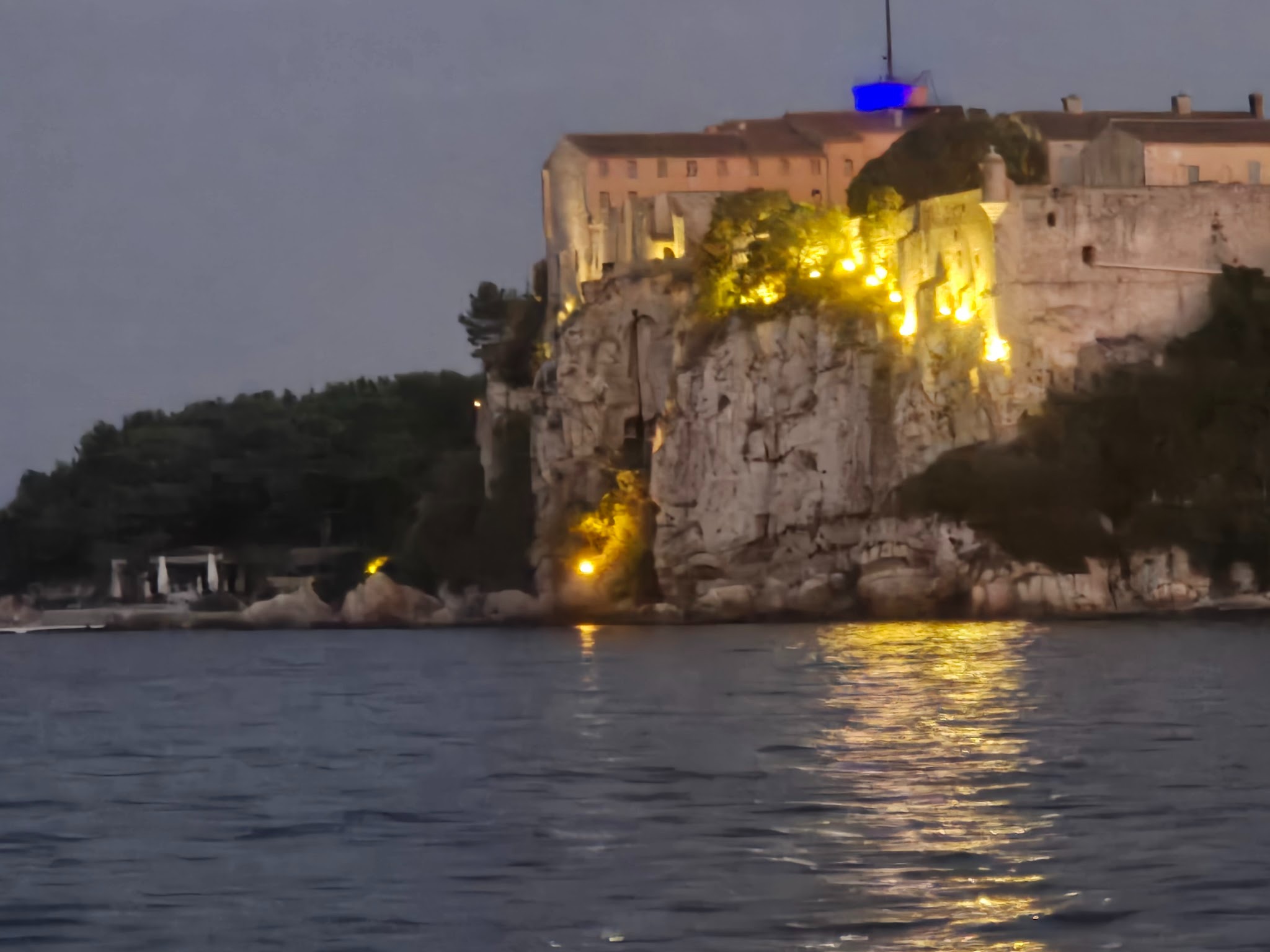
Our catamaran is hanging on a mooring buoy under the cliffs of Fort Royal, off Ile Sainte-Marguerite, an island 1.5 miles south of Cannes, France. It was a Roman settlement, then owned by monks for 1000 years. It became a heavily fortified strategic outpost under Louis XIV in the late 1600s. And then a high security state prison which for 11 years held "The Man with the Iron Mask" recreated on the silver screen by Leo DiCaprio and friends in 1998.
Now renowned for its annual International Film Festival, Cannes is the heart of the French Riviera, France’s southern coast lying on the Mediterranean Sea and surrounded by Monaco, Antibes, Nice, Marseilles and St Tropez. These storied locations have a world-wide allure and have been a draw for artists and writers due to their mild climate, gorgeous lighting and laid-back vibe. Renoir, Matisse and Picasso came here to paint, F. Scott Fitzgerald and Hemingway came to write and Brigitte Bardot came to saunter the sands of St. Tropez.
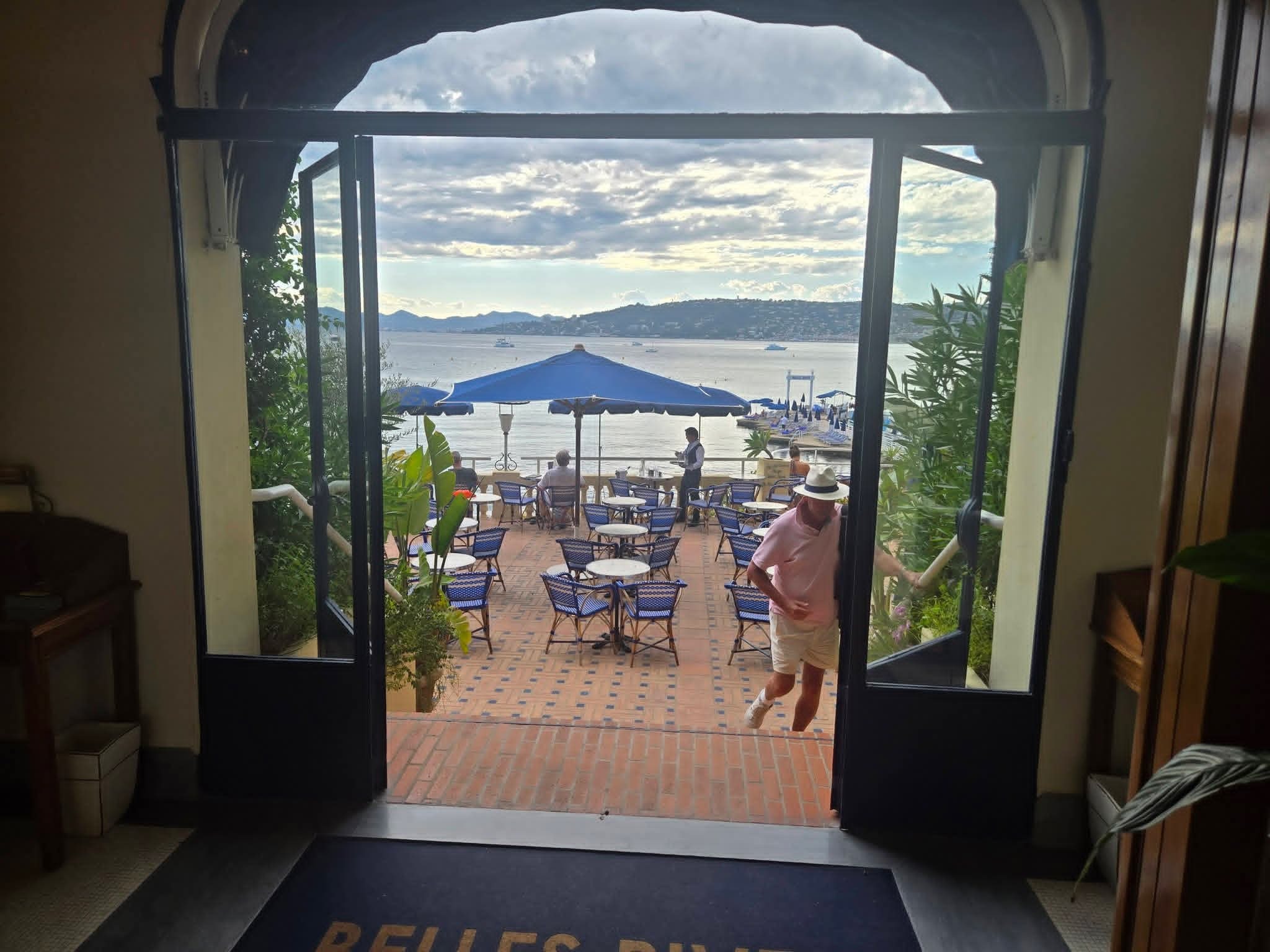
The seaside terrace of F. Scott and Zelda’s home when they lived in Antibes 100 years ago now a 5-star
‘Chic and divine' now but the Riviera was not always so. As Greek civilization was blossoming with the Age of Pericles and the Acropolis was being rebuilt in the fifth century BC, the Greeks, Phoenicians, Carthaginians and early Romans were developing and protecting trade routes throughout the Sea.
The Med has been an artery for conquest since that time, no more so than in the Second World War. Allied war planners initially wanted a 2-prong attack on German controlled France.
In 1943 Operation Overlord striking northern France and Operation Anvil (later renamed Operation Dragoon) striking the southern coast were scheduled for June 1944. The thought was to split the German defense. But with the growth of the Normandy invasion plan limiting landing craft for the Med, and ongoing tenacious German resistance in Italy, Operation Dragoon was postponed
The US Army's Third Infantry Division fought through some of the bloodiest and grueling campaigns of the European Theater. 15,000 men landed near Casablanca in Morocco in November 1942 and while the British Eighth Army was engaged with Erwin Rommel, "the Desert Fox" across Egypt, Libya and Tunisia, the Americans trained for the upcoming invasion of Sicily. Among the soldiers was a 17-year-old who had lied about his age, a five foot 5 inch Texan weighing a hundred and fifteen pounds.
His name, Audie Murphy.
Winston Churchill had considered the Mediterranean approach to Europe the "soft underbelly" of Axis controlled territory. But there was nothing soft about Murphy's first amphibious landing at Licata on the southwest shore of Sicily. Generals Patton and Montgomery raced their troops to Messina. And then the war moved to Italy, but no soft underbelly here either as the "Rock of the Marne" earned its legendary reputation bestowed in World War I. The Third Infantry Division now with expertise, speed and cunning battled the mountainous terrain and dug in German resistance. The Division, suffering 900 casualties alone in one day at Anzio, finally broke through and led the advance northward towards Rome, liberated on June 4, 1944, 2 days before D-day.
Shortly after taking Rome, the Third Infantry Division was pulled from the Italian theater and in August executed its fourth amphibious assault of the war landing at Saint Tropez in France, spearheading Operation Dragoon.
.
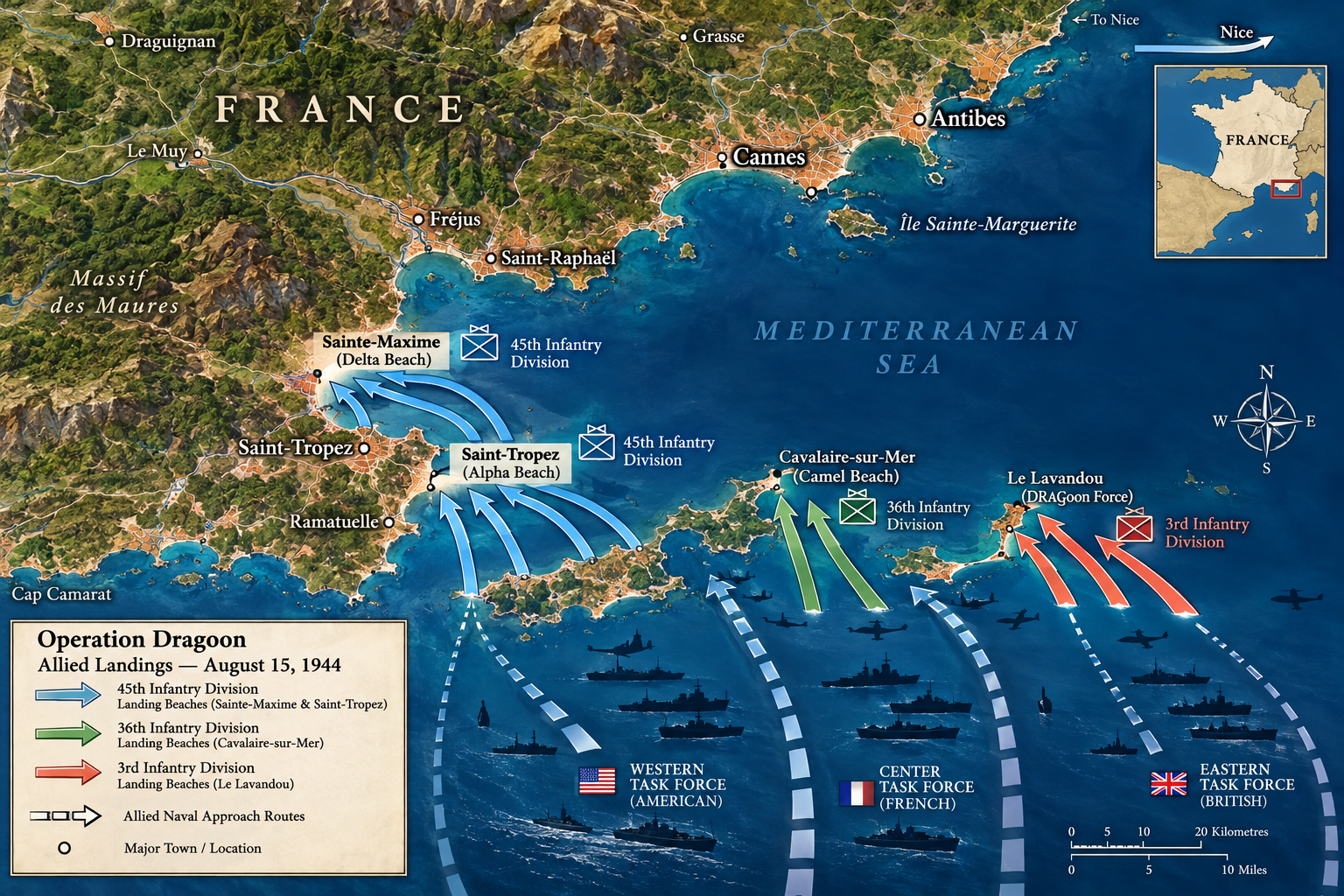
Audie Murphy. who would become the most decorated of all World War II combat soldiers would earn the Distinguished Service Cross for his extraordinary heroism on that day, August 15th, 1944 outside Saint Tropez.
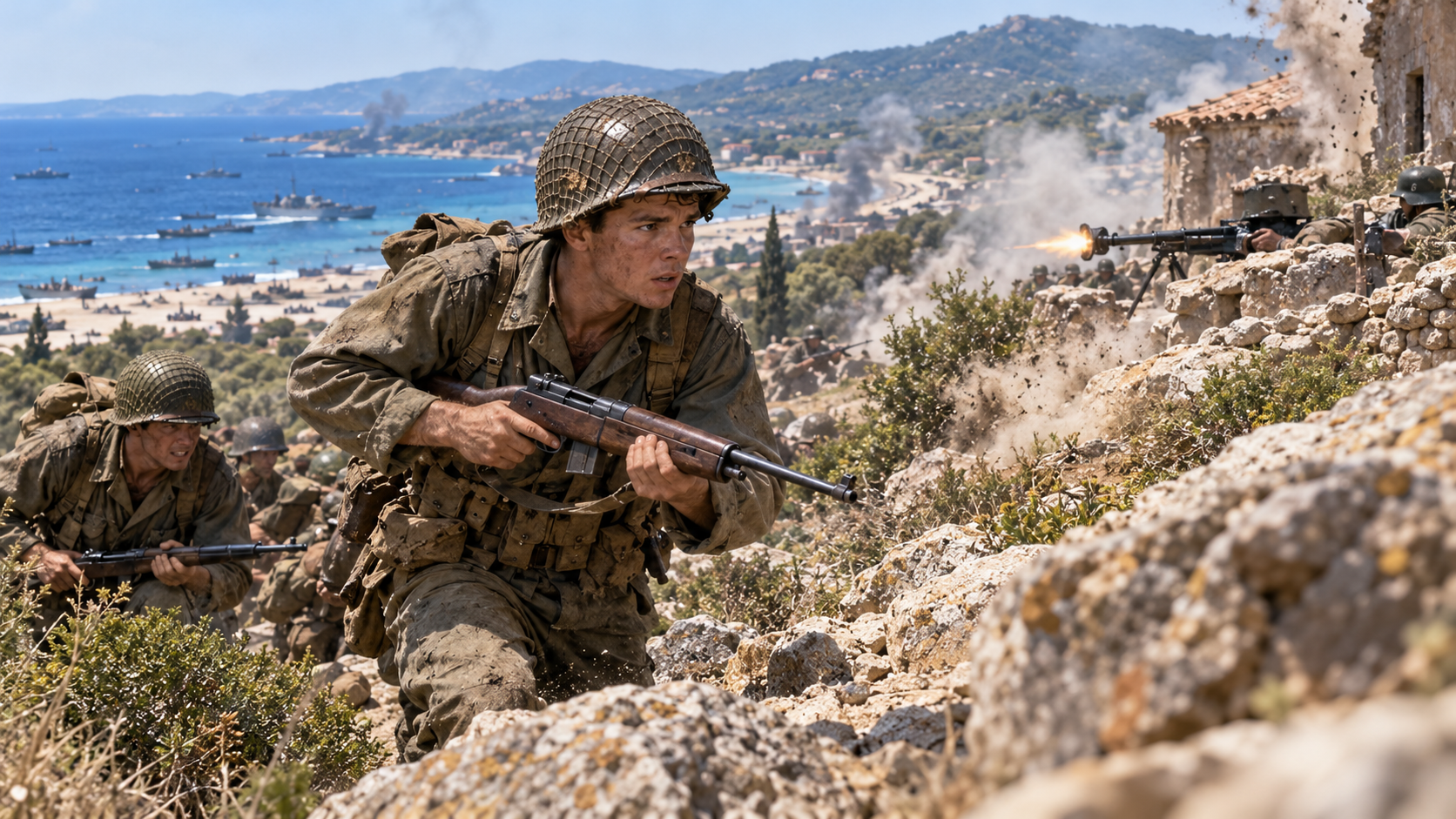
The "Blue and White Devils" of the Third Infantry, so named by the Germans at Anzio, would continue north and finish the war having spent 30 months and 531 combat days breaking a record for their endurance. Only 10-15% of the original soldiers remained.
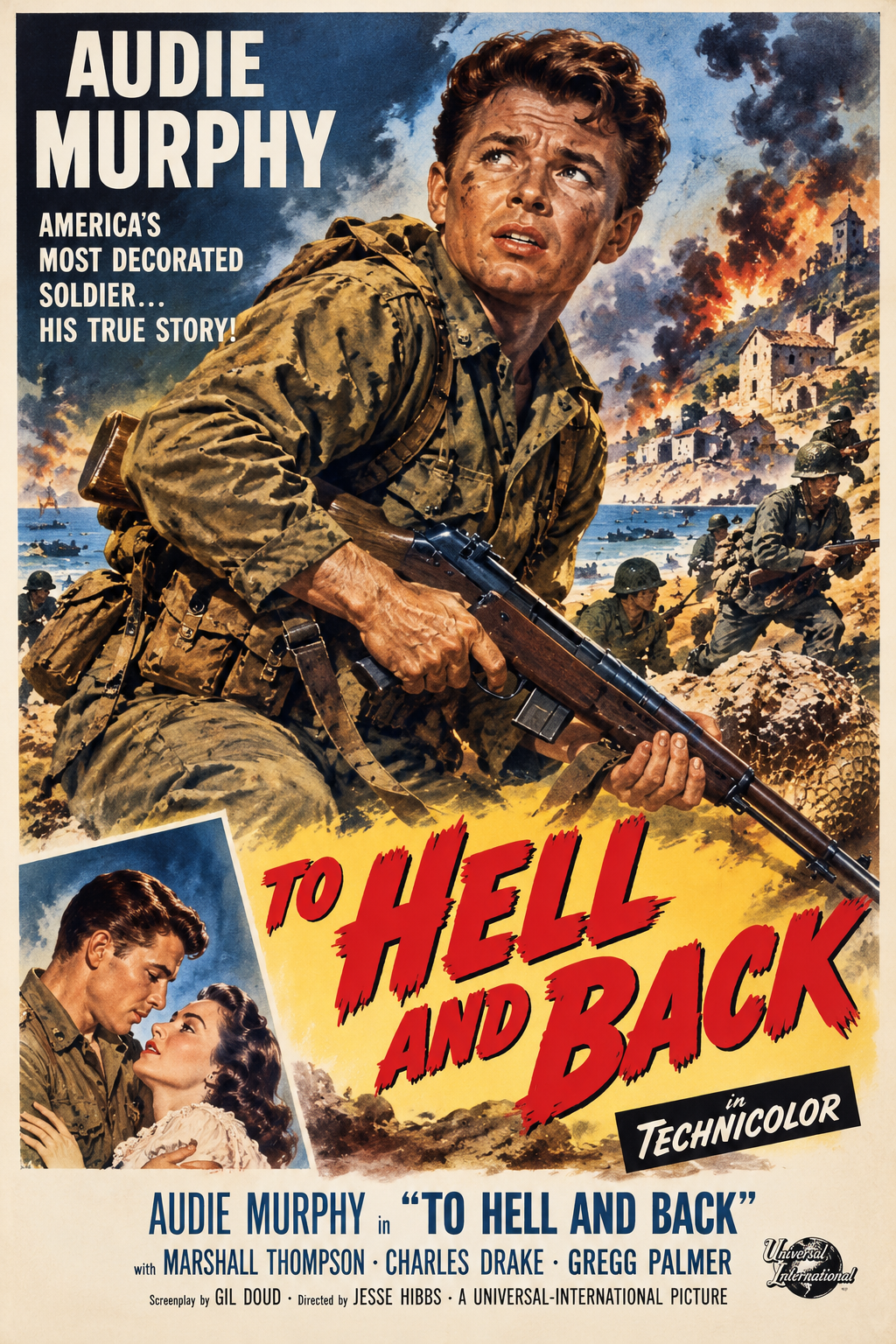
One of the lucky few, Audie Murphy survived the Second World War and lived on to have a remarkably successful 21-year career in Hollywood, with him writing then staring in
“To Hell and Back”.