Chasing the Sun
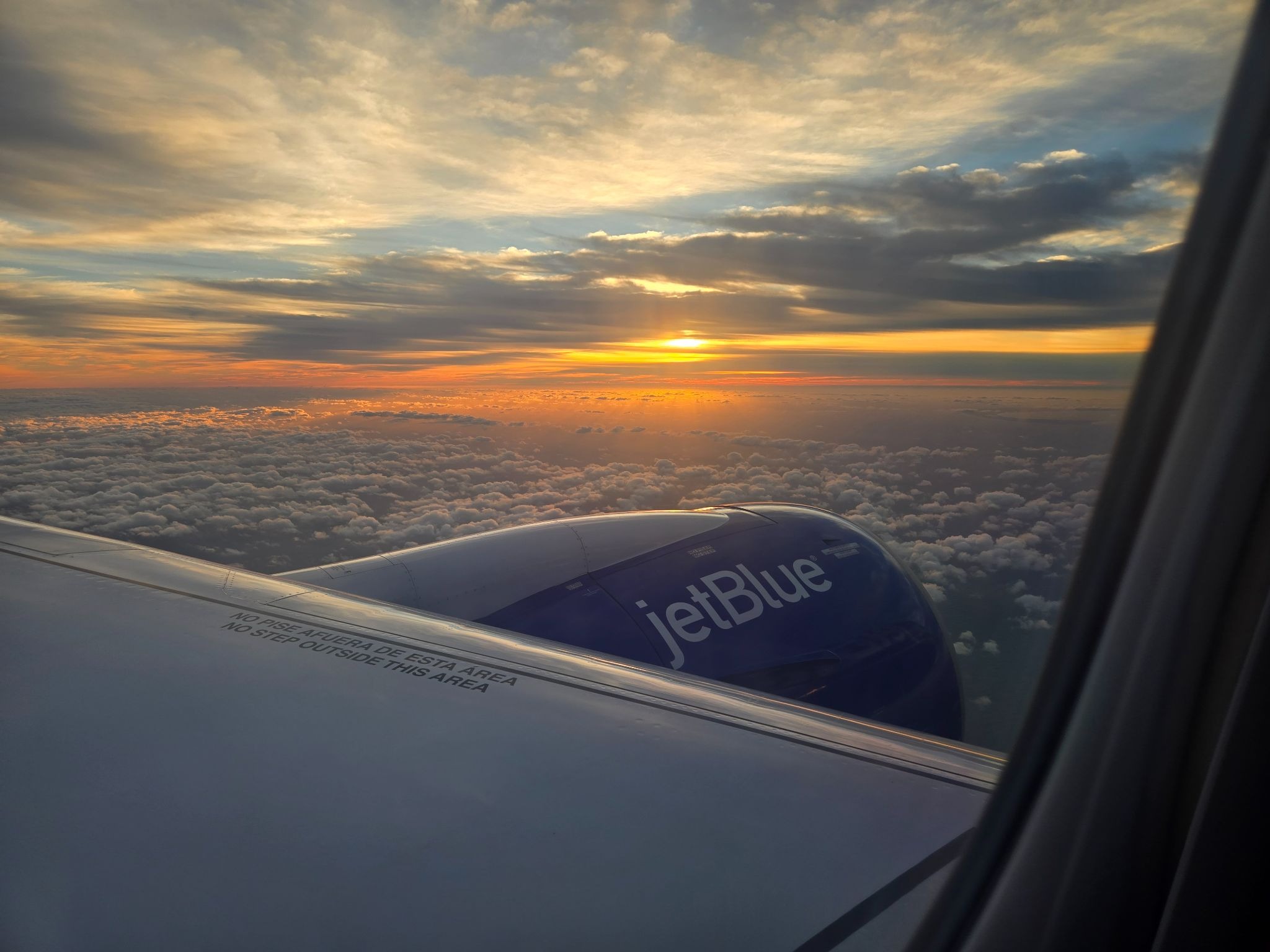
I love to fly; the awe returns me to childhood. My generous and loving wife has for more than 40 years offered me the window seat.
But I'm not the only traveler who enjoys looking out a window.The word POSH (high-end and luxurious) is an acronym for “Port out - Starboard home " and although it likely derives from 19th century steamship travel from England to India where the objective was to keep your cabin in shade and cooler, I like to think of the 1950s and the Golden Age of transatlantic ocean liners. This was when the Cunard Line’s RMS Queen Mary and RMS Queen Elizabeth dominated the route between New York and Southampton. For the high society sports on board, leaving New York harbor and steaming east, the view from the ship's left side kept your interest as you stood along Long Island’s south shore and passing the Hamptons perhaps glimpsed your summer “cottage” .
The return trip would offer that rarefied view again from the ship's starboard side.
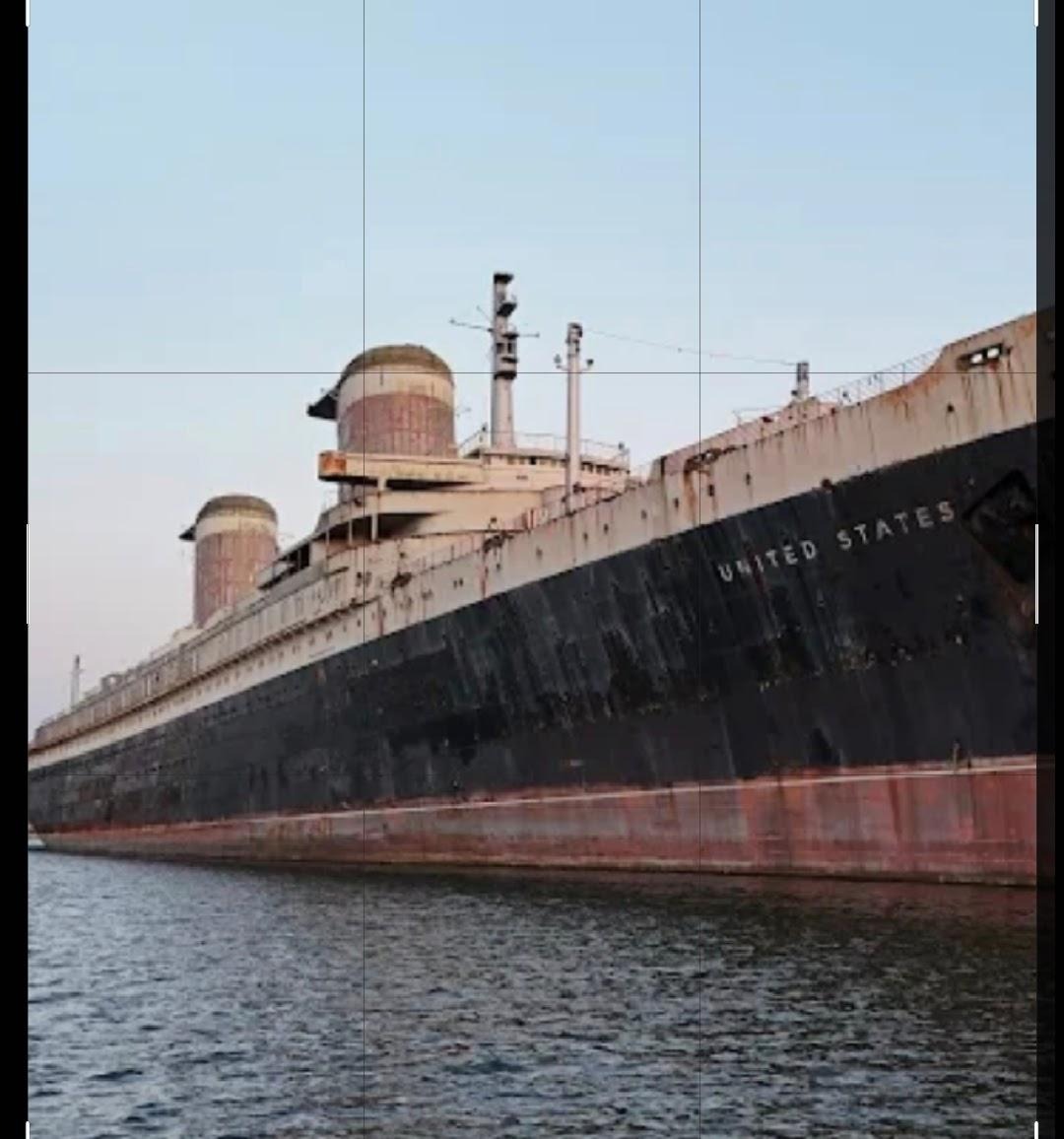
As I write this, the 900 foot long SS United States, the largest ocean liner constructed completely in the U.S., the legendary ocean liner that in 1952 on her maiden voyage set the still unbroken transatlantic speed record, is soon to be towed from the port of Mobile, Alabama to a spot 20 miles offshore where she will be sunk to serve as an underwater reef. A shame I think in the loss to our history.
SS United States with portholes removed, hatches open, doors off, thoroughly scrubbed
Ready to be towed offshore
From Ben Franklin's 8-week crossing of the ocean to the record-breaking 43 mph transit by the SS United States to today's regular commercial jet traffic over the North Atlantic at 550 mph, our Earth has gotten progressively smaller and we can now catch the sun.
Because we've learned the Earth is a sphere and round, fortunitly unlike the depiction on this book's front cover, the shortest route over the globe follows a great circle path. Sue and I left Istanbul last week for a flight to Boston. We flew northwest then southwest over 10 hours. We left the Black Sea, we flew over Ireland, just south of Iceland, over the bottom quarter of Greenland, on to North America at Goose Bay in Labrador, then south to Boston. The great circle route covered a distance of 4824 miles versus 5162 miles which the plane would have followed on a constant compass course. The latitude of Istanbul is 41°North and Boston is 42° North. The highest latitude we encountered at the peak of the arc on our crossing was 52° North, just south of Cape Farewell, Greenland.
The Earth spins around its north/south axis on the equator at 1040 mph. At 42° North that rotational speed is reduced to 773 mph and at 52° North, 641 mph. Rockets are launched eastward near the equator to harness this greater speed. Because the Earth's rotational speed drops as you head north or south from the Equator, a slower spinning ground below allows for a plane to keep up or even outrun the sun’s travel from east to west.
And so it was as I stared out my airplane window, the sun wouldn't set and as we flew further north its descent slowed and slowed. Crossing over Greenland the sun was only traveling to the West at 100 miles an hour faster than we were. The sun appeared pinned; it refused to drop.
Had we been traveling west on the supersonic Concorde, this plane’s higher airspeed of 1,350 mph would have been faster than the rotational speed of the Earth. The aircraft would have been outpacing the planet’s spin, moving faster than the rotation of the earth at mid-latitudes. Leaving Europe at evening twilight the sky would have grown progressively brighter and if the sun had already set it would reverse direction and rise ahead of us as a Western Sunrise. We would have arrived in Boston earlier than when we had left Europe ,....modern-day time travelers.
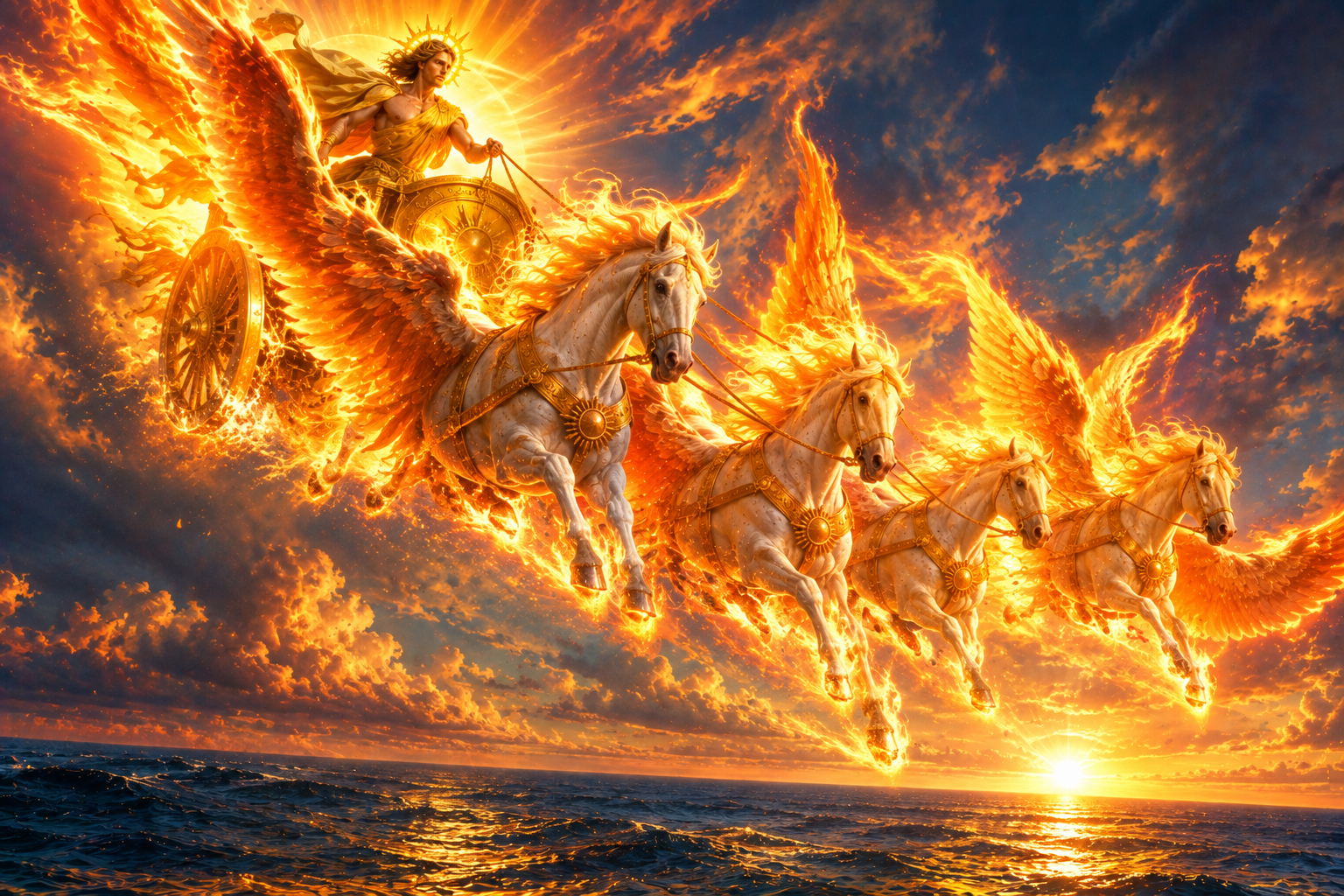
And we would have greatly angered the Greek God, Helios. whose fiery chariot was not intending to re-emerge once he had driven his blazing steeds into the western ocean at day’s end.