Battle of Long Island
"Good God, what brave fellows I must this day loose," Gen. George Washington
In 1775, on the eve of the American Revolution, George Washington had no army and his colonel in charge of artillery had no guns. But Henry Knox knew where he could find some. So in late December he traveled 300 miles into enemy territory to Ticonderoga, NY and with oxen and men in the winter's depths hauled 59 canon in a daring operation through ice and snow back to Boston - having to retrieve some he dropped through the ice crossing the Hudson River. He arrived just in time to help Washington fortify Dorchester Heights overlooking the city.
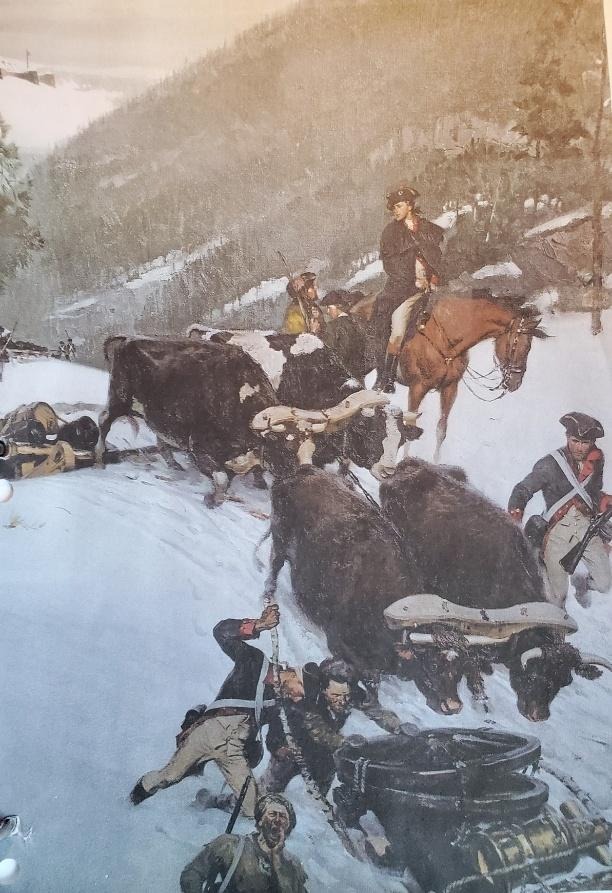
Henry Knox Hauling Canon With Oxen To Boston. Fort Ticonderoga in the background.
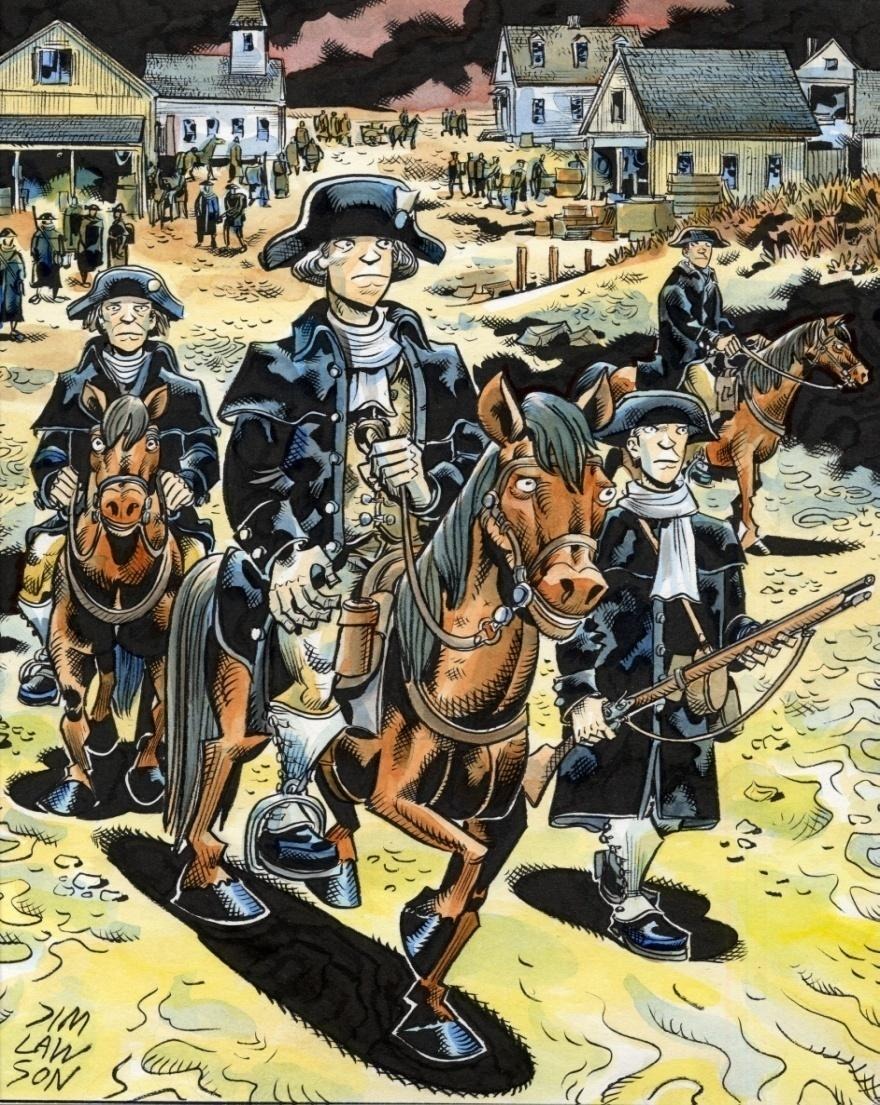
As British General William Howe had been dismayed by the American's doughty response to the Brit's attack at Bunker Hill six months earlier, Howe was now further astounded to see a battery of cannon atop Dorchester Heights where there had been none the previous evening. Preferring discretion to valor, he vacated Boston with his army and sailed for Halifax.
Losing the adage to 'keep your friends close and your enemies closer,' Washington now had to guess where the British would next show up. He understood the strategic importance of New York with its well-protected harbor at the mouth of the Hudson River, so he moved his rag-tag forces south.
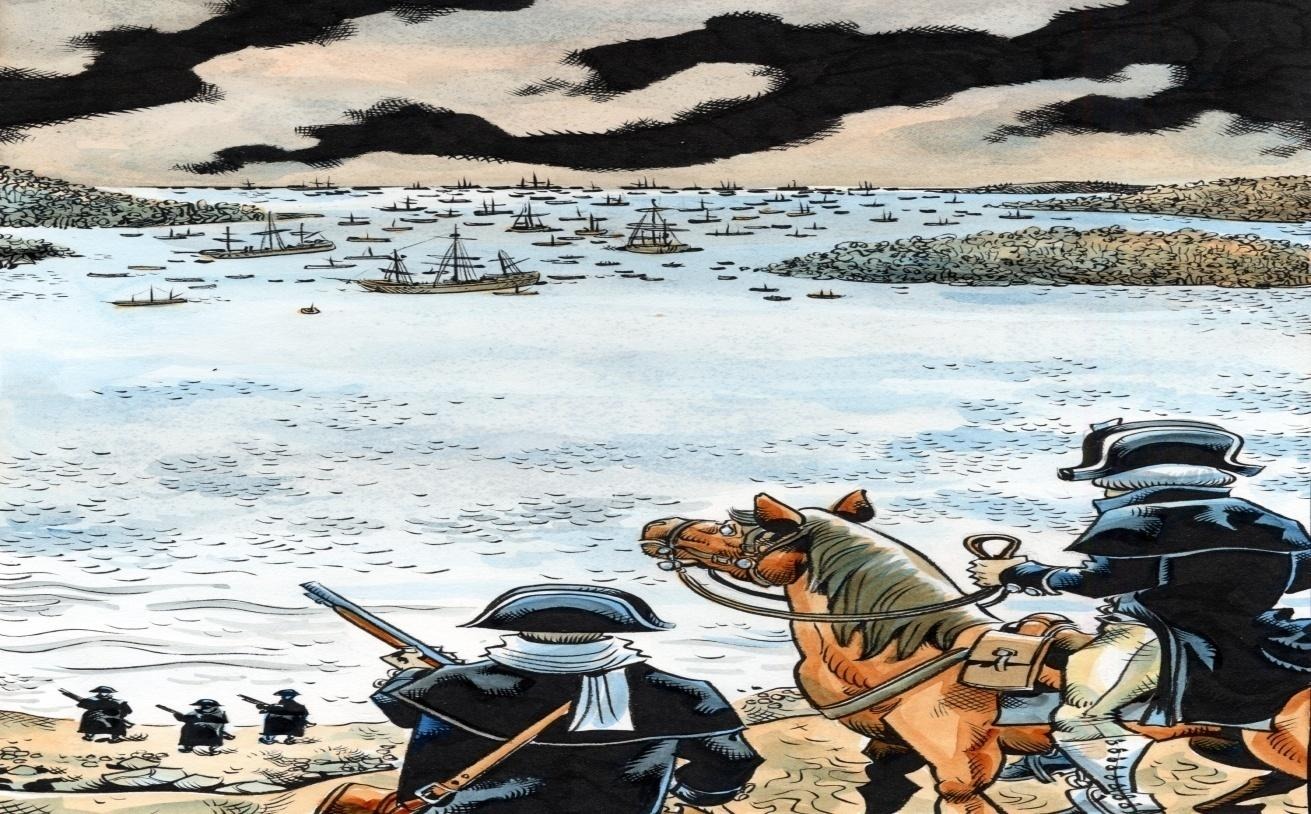
On June 9, 1776 the British fleet sailed from Halifax. On the 29th signals were sent from men stationed on Staten Island that the fleet had appeared. Within hours 45 British ships had dropped anchor in New York's Lower Bay and within a week that number had grown to 130. The population of New York went into a panic. The following week British troops began to land on Staten Island. On June 6 news reached New York that Congress had voted for independence four days earlier and on July 9th the Declaration of Independence was read at the city commons.
Following this, a mob ran down to Bowling Green and tore down the gilded lead equestrian statue of King George III of Great Britain.
By August 12, the British fleet in New York Harbor numbered over 400 ships including 73 warships. Ashore encamped on Staten Island were 32,000 well-provisioned and trained troops (as the chorus in “Hamilton’s” ominous song, ’Right Hand Man’ reiterates) ..... and Washington was unsure where the British would attack.
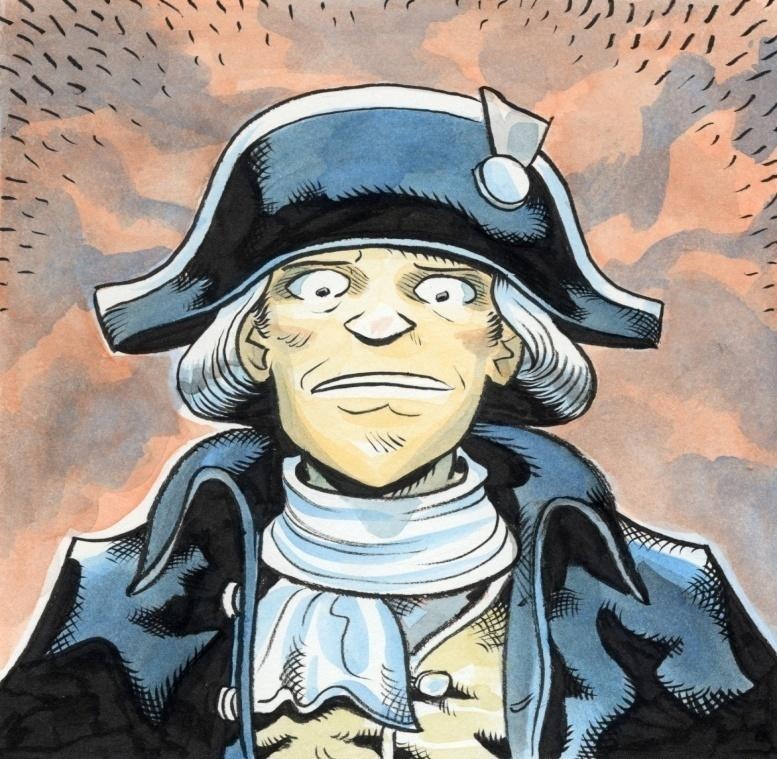
For good reason we remember George Washington as the 'Father of Our Country' and the 'Indispensible Man'. The odds of surviving the coming British onslaught those mid-summer days of '76 were miniscule and Ben Franklin's saw to his countrymen to "all hang together lest we all hang separately" was depressingly apt.
How does one summon the courage? How does one motivate others when the odds of success are so slim? Yet five years later Washington led his army of farmers, tradesmen, merchants and sailors in defeating the world's greatest army.
In 1799 George Washington was buried in the family graveyard on the grounds of his ancestral home, Mt. Vernon. In 1853 the lid of the sarcophagus in which he lay was cracked open. The first President appeared in full skeletal form with a small patch of translucent skin still attached to his right cheekbone. Today Washington's remains are dust. Yet 240 years ago that dust carried the hopes and dreams of what would become the greatest nation on earth.
" "My God, how can we prevail?"